Poke Bowl Sauce Recipes: 8 Quick Sauces, Classic To Spicy
Poke Bowl Sauce Recipes: 8 Quick Sauces, Classic To Spicy
Poke Bowl Sauce Recipes: 8 Quick Sauces, Classic To Spicy
A great poke bowl lives or dies by its sauce. The fish matters, sure, but that drizzle on top? That's what brings everything together and makes each bite memorable. At Menehune Grille, we've spent years perfecting our poke at our oceanfront spot in the Ilikai Hotel, and we know firsthand how the right sauce transforms simple ingredients into something special. Now we're sharing our favorite poke bowl sauce recipes so you can recreate that authentic Hawaiian flavor at home.
Whether you prefer a classic soy-sesame blend, something creamy with a kick, or a bright ponzu-based dressing, these eight recipes cover every craving. Each one takes just minutes to prepare using ingredients you likely already have. By the time you finish reading, you'll have a full lineup of sauces ready to elevate your homemade poke bowls from good to genuinely crave-worthy.
What makes a great poke bowl sauce
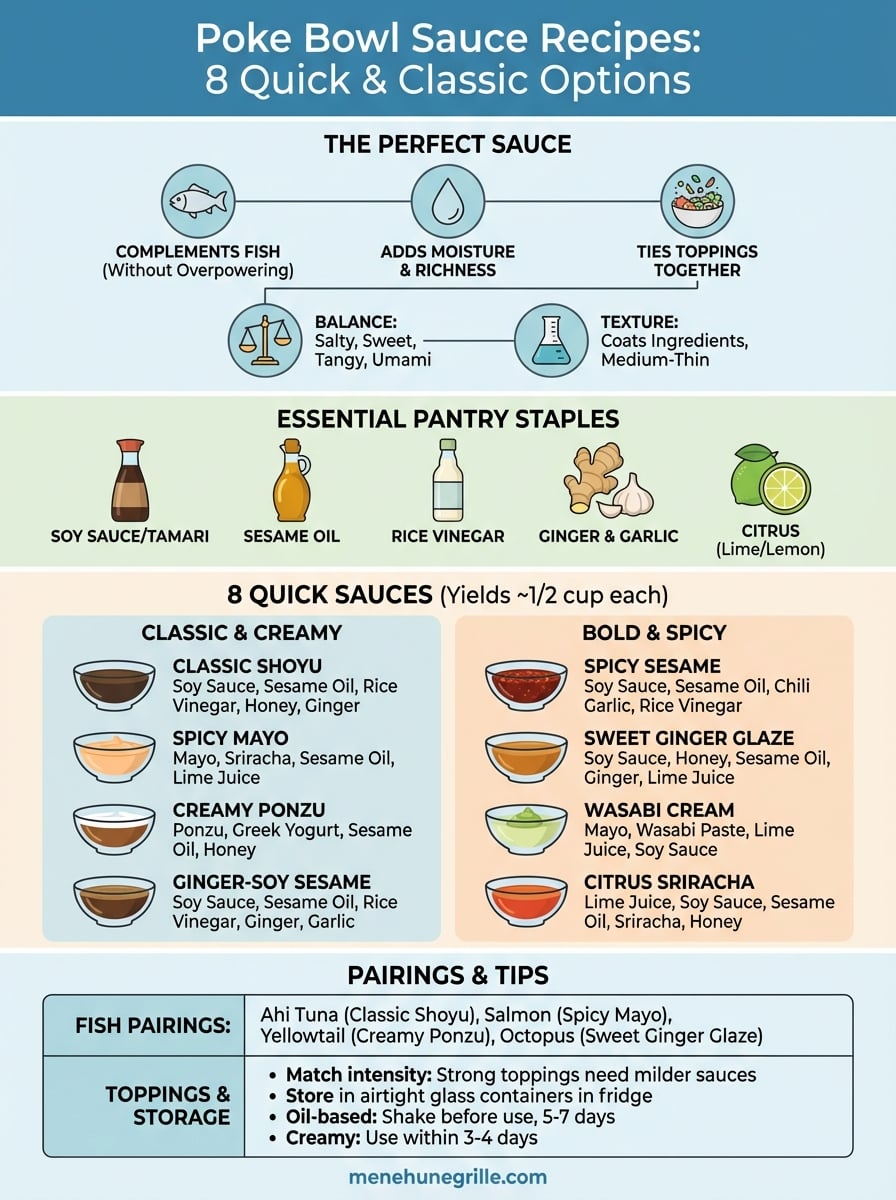
A truly great poke bowl sauce does three things at once: it complements the fish without overpowering it, it adds moisture and richness to your bowl, and it ties all your toppings together into a cohesive bite. The best poke bowl sauce recipes strike a careful balance between salty, sweet, tangy, and umami notes while maintaining a consistency that clings to your ingredients instead of pooling at the bottom.
Balance of flavors
Your sauce needs to work in harmony with raw fish, which has a delicate, clean taste. Too much salt or acid will drown out the fish, while too little leaves your bowl tasting flat. A strong poke sauce typically combines a salty base (soy sauce or tamari), a touch of sweetness (honey, sugar, or mirin), umami depth (sesame oil or fish sauce), and a bright note (citrus, rice vinegar, or ginger).
The secret is layering flavors rather than relying on a single dominant ingredient.
Think of each component as playing a specific role. Soy sauce provides your foundation, sesame oil adds nuttiness and body, a squeeze of lime cuts through the richness, and a pinch of sugar rounds out any harsh edges. When you taste your finished sauce, no single flavor should jump out. Instead, you want a balanced profile that makes you want another bite.
Texture and consistency
Your sauce should coat your ingredients without turning your bowl into soup. Most successful poke sauces have a medium-thin consistency, similar to a light salad dressing. They're fluid enough to drizzle and toss easily but thick enough to cling to cubed fish and rice.
Oil-based sauces like classic sesame-soy blends naturally achieve this texture. Creamy options using mayo or Greek yogurt need thinning with citrus juice or a splash of water to reach that same pourable consistency. You want your sauce to settle into the bowl and coat every component evenly when you give it a quick toss before eating.
Step 1. Stock your pantry and choose a base
Before you start mixing your first poke bowl sauce recipes, you need the right ingredients on hand and a clear direction for flavor. Most poke sauces share a common pantry foundation, and once you stock these basics, you can pivot between classic and creative variations with minimal effort.
Essential pantry staples
Your core ingredients create the building blocks for nearly every poke sauce. Keep these five staples stocked and you'll always be ready to whip up something delicious:
- Soy sauce or tamari: Your primary salt source and umami base
- Sesame oil: Adds nutty richness and authentic Hawaiian flavor
- Rice vinegar: Provides acidity without harsh sharpness
- Fresh ginger and garlic: Bring aromatic depth to any blend
- Citrus (lime or lemon): Cuts richness and brightens your sauce
Stock these five ingredients and you'll have the foundation for authentic island-style poke sauces.
Choosing your base flavor
You build every sauce around one dominant flavor profile. Classic soy-based sauces lean heavily on umami and work beautifully with ahi tuna. Creamy mayo-based options pair better with richer fish like salmon and add body to your bowl. Ponzu bases bring bright, citrusy notes that complement lighter preparations.
Start by deciding which flavor family speaks to you, then build from there using your pantry staples to add complexity.
Step 2. Make 8 quick poke bowl sauces
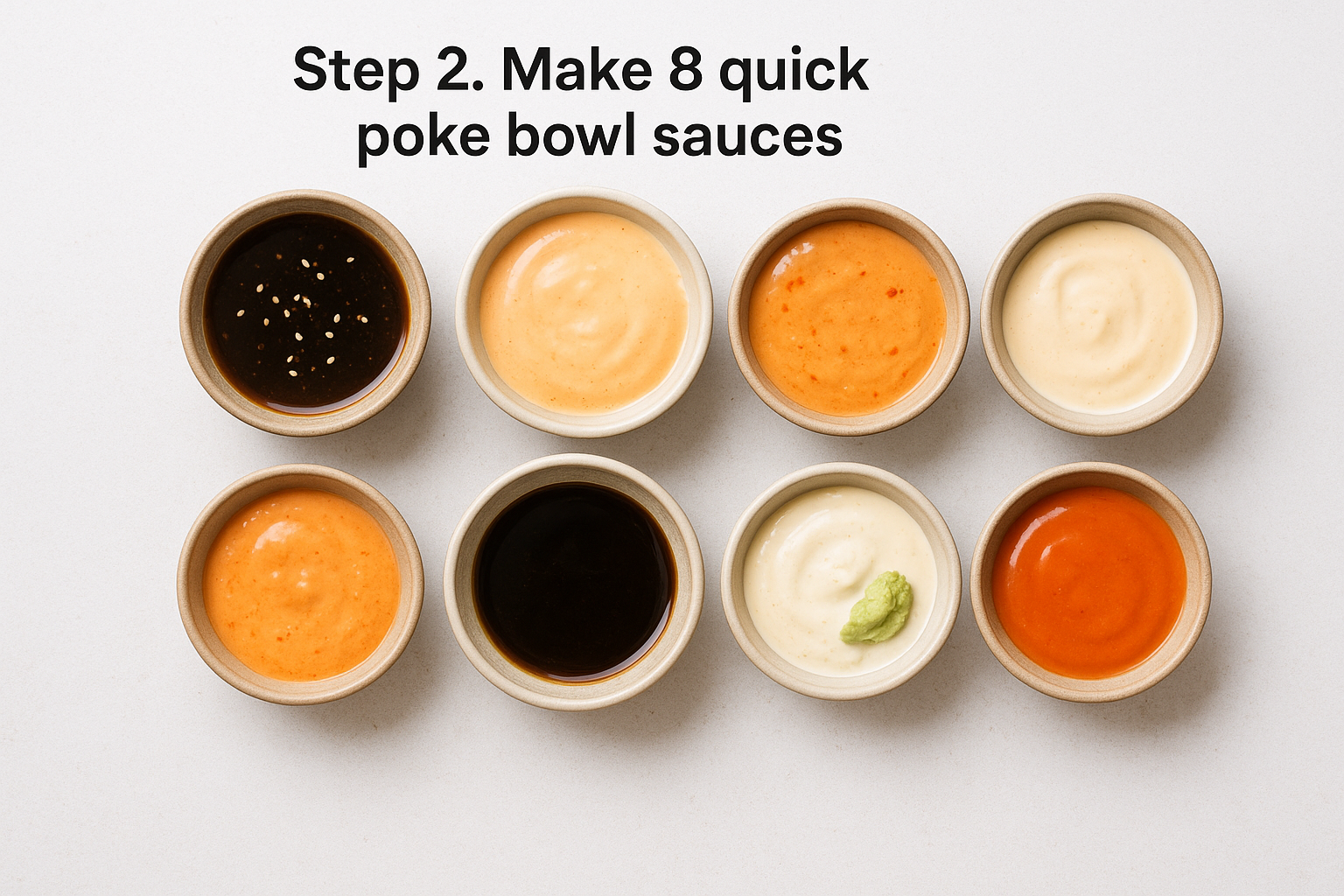
Now you're ready to create your arsenal of poke bowl sauce recipes. Each recipe below yields roughly 1/2 cup of sauce, enough for four to six bowls depending on how generously you drizzle. Mix all ingredients together in a small bowl and whisk until smooth.
Classic and creamy options
Classic Shoyu Sauce: Combine 1/4 cup soy sauce, 2 tablespoons sesame oil, 1 tablespoon rice vinegar, 1 teaspoon honey, and 1/2 teaspoon grated ginger.
Spicy Mayo: Mix 1/3 cup mayo, 1 tablespoon sriracha, 1 teaspoon sesame oil, and 1 teaspoon lime juice.
Creamy Ponzu: Whisk together 3 tablespoons ponzu sauce, 2 tablespoons Greek yogurt, 1 tablespoon sesame oil, and 1 teaspoon honey.
Ginger-Soy Sesame: Blend 3 tablespoons soy sauce, 2 tablespoons sesame oil, 1 tablespoon rice vinegar, 1 teaspoon fresh grated ginger, and 1/2 teaspoon minced garlic.
Mix each sauce fresh and let it sit for 5 minutes before tasting to allow flavors to develop.
Bold and spicy variations
Spicy Sesame: Combine 3 tablespoons soy sauce, 2 tablespoons sesame oil, 1 tablespoon chili garlic sauce, and 1 teaspoon rice vinegar.
Sweet Ginger Glaze: Mix 2 tablespoons soy sauce, 2 tablespoons honey, 1 tablespoon sesame oil, 1 tablespoon grated ginger, and 1 teaspoon lime juice.
Wasabi Cream: Blend 1/4 cup mayo, 1 teaspoon wasabi paste, 1 tablespoon lime juice, and 1/2 teaspoon soy sauce.
Citrus Sriracha: Whisk together 2 tablespoons lime juice, 2 tablespoons soy sauce, 1 tablespoon sesame oil, 1 tablespoon sriracha, and 1 teaspoon honey.
Step 3. Match sauces to fish and toppings
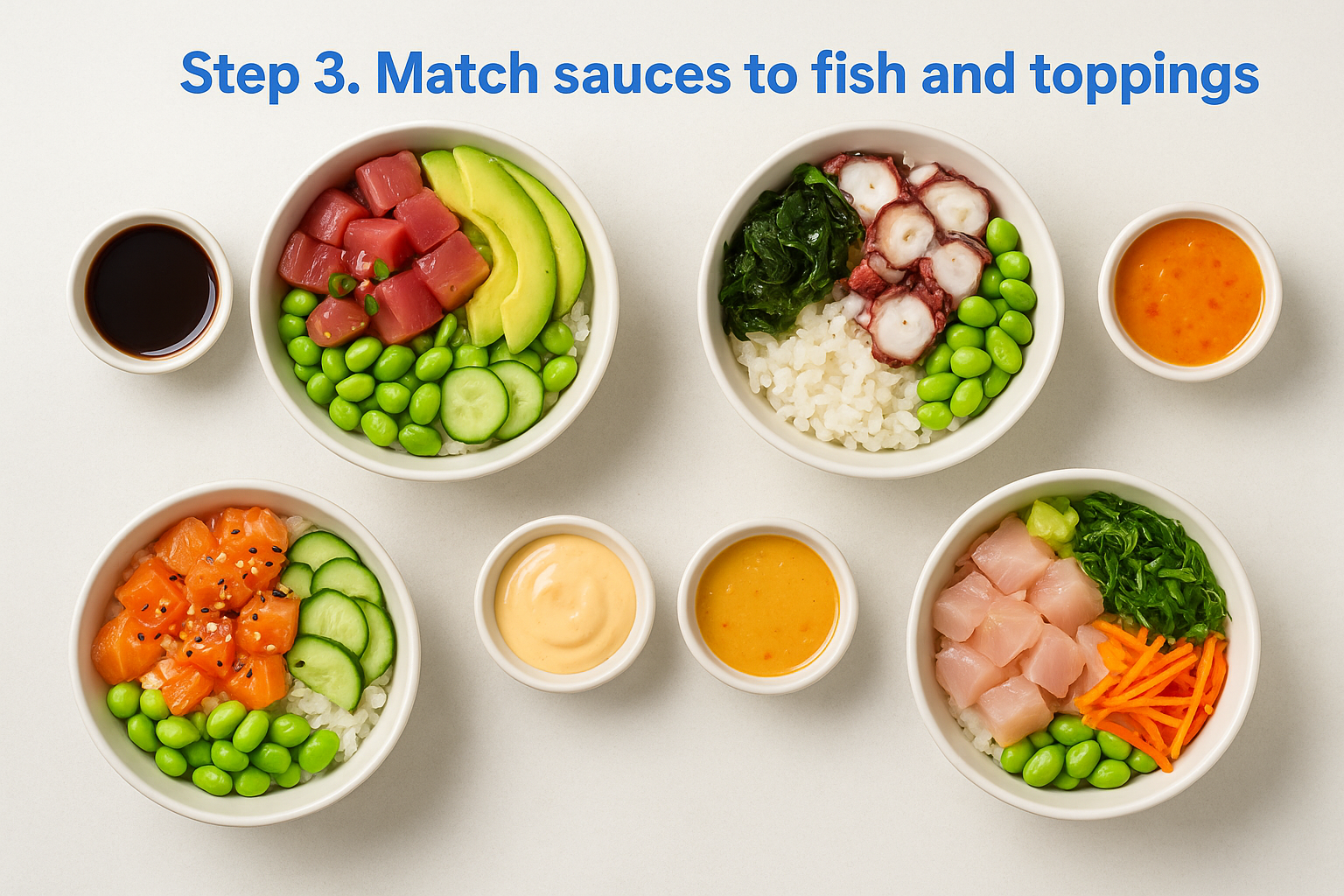
Your choice of sauce should complement your protein and work with your toppings, not fight against them. Different fish have varying levels of richness and flavor intensity, and your vegetables, seaweed, and mix-ins each bring their own taste profiles. Getting these pairings right transforms your bowl from a random collection of ingredients into a balanced, cohesive meal.
Fish and sauce pairings
Lean fish like ahi tuna pairs beautifully with classic shoyu or spicy sesame sauces that add richness without overwhelming the clean flavor. Salmon's higher fat content stands up to bolder options like wasabi cream or citrus sriracha. Octopus and other chewier proteins benefit from citrus-forward sauces that cut through texture with bright acidity.
Match your sauce to your protein using these proven combinations:
| Fish Type | Best Sauce Choices | Why It Works |
|---|---|---|
| Ahi Tuna | Classic Shoyu, Ginger-Soy Sesame | Clean flavor needs balanced umami |
| Salmon | Spicy Mayo, Wasabi Cream | Rich fish handles bold, creamy sauces |
| Yellowtail | Creamy Ponzu, Citrus Sriracha | Moderate richness pairs with citrus |
| Octopus | Sweet Ginger Glaze, Spicy Sesame | Chewy texture needs acid and spice |
Balancing toppings with sauce intensity
Your toppings influence which sauce works best in your final bowl. If you're loading up with strong flavors like pickled ginger, jalapeños, or crispy garlic, choose a milder sauce like classic shoyu that won't create competing tastes. Bowls with subtle toppings such as cucumber, edamame, or avocado can handle bolder poke bowl sauce recipes without becoming overwhelming.
Match your sauce intensity to your toppings: bold toppings need restrained sauces, while mild ingredients invite stronger flavor profiles.
Step 4. Use, store, and scale your sauces
Once you've mixed your poke bowl sauce recipes, knowing how to use them properly and store them safely ensures you get the most from each batch. These sauces stay fresh for days when handled correctly, and you can easily scale any recipe to prep multiple meals at once without sacrificing quality or flavor.
Proper storage techniques
Store your finished sauces in airtight glass containers or mason jars in your refrigerator immediately after mixing. Most poke bowl sauce recipes stay fresh for 5 to 7 days when properly sealed and kept cold. Oil-based sauces like classic shoyu separate naturally during storage, so give them a quick shake before each use to recombine the ingredients.
Always smell your sauce before using. If it smells off or shows any discoloration, discard it and make a fresh batch.
Label each container with the sauce name and date prepared to track freshness. Creamy mayo-based options have a shorter shelf life than oil-based varieties, so use them within 3 to 4 days for best quality and food safety.
Scaling recipes for meal prep
Double or triple any recipe by multiplying each ingredient proportionally. If you're prepping bowls for the week, make larger batches on Sunday and portion them into smaller containers for grab-and-go convenience. A standard half-cup recipe serves four to six bowls, so multiply by three for 12 to 18 servings throughout your week.
Bring it all together
You now have eight versatile poke bowl sauce recipes in your arsenal, from classic shoyu to bold wasabi cream. You've learned which sauces pair best with different fish, how to balance flavors with your toppings, and the proper techniques for storing and scaling your creations. Each recipe takes just minutes to prepare using pantry staples you likely already own, giving you the freedom to experiment and find your perfect combination.
Making restaurant-quality poke at home becomes simple when you understand these fundamentals. Start with one or two favorite sauces this week, then expand your rotation as you build confidence. The beauty of homemade poke lies in customization, and these sauces give you complete control over every element of your bowl.
When you're ready to taste how poke should be done, visit us at Menehune Grille in Waikiki's Ilikai Hotel. We've been perfecting our poke and sauces for years, and we'd love to show you what authentic Hawaiian flavors taste like against an oceanfront backdrop.